
Written by Matt Gose, Ciara Guerrero, and Alli
If you’ve lived on the Front Range for any amount of time, you know drought isn’t new. But it is getting more intense and more frequent. Less snowpack, hotter summers, and increasing water restrictions are already changing how we grow and access food. At the same time, people across Colorado are stepping up! From backyard gardens, to community farms, to food banks, there is a growing movement to build a food system that can more readily adapt to the threats of climate change. Making sure people can access healthy, local, low/no cost food no matter what conditions is what food resiliency is really all about. Gardening in Colorado has always required some creativity, and now it requires more intention and community support to truly thrive, these themes are what we intend to uplift today in this article.
What’s really encouraging is that a lot of crops can still thrive with limited water consumption. Tomatoes, peppers, beans, squash, and eggplant can produce substantial yields with limited water once firmly established. Root vegetables like carrots and beets are also reliable, especially when the surrounding soil is healthy and able to hold moisture. Fruits like peaches, plums, cherries, and some apple varieties are also well suited to our climate and varied soil layout. Native options like chokecherries, gooseberries, and serviceberries are even more resilient and require less water over time. Perennial edibles, like sunchokes, rhubarb, walking onions, and some kales can provide harvests for years, even decades, after planting. Herbs like rosemary, thyme, sage, and oregano are easy additions that handle heat and dry conditions with grace. (List of edible plants that thrive in Colorado’s climate here – provided by Pikes Peak Permaculture) The bottom line here is that what you grow matters, but how you grow it matters just as much.
Regenerative practices can make a huge difference, especially in drought-prone places across the Western US. Building healthy soil is also key to supporting a healthy garden. Adding compost and other organic matter helps soil retain water and provides vital nutrients to the plant, while mulching keeps moisture from evaporating too quickly in our dry climate. Drip irrigation is far more efficient than sprinklers, and watering early or late in the day when the UV index is lower reduces evaporation substantially and allows plants to absorb water much more effectively. (Read more about moisture retention and soil health best practices here – Provided by Wild Oasis Permaculture)
Speaking of water retention, many communities across the Front Range have already implemented water-saving measures (Link in Aurora Water Saving Measures Article Here). These often include limits on which days folks can water their gardens, restrictions during the hottest parts of the day, and incentives to replace lawns with drought-tolerant landscaping. Xeriscaping, which focuses on native and low-water plants, is becoming more common in Colorado and is already quite popular in desert climates such as Arizona, New Mexico, and Nevada.
Some states also offer rebates and tax incentives for efficient irrigation systems, rain barrels, and wildfire prevention measures. (CO Wildfire Tax Rebates) These policies are about making sure we conserve our water use so that we can keep growing food and supporting our communities long term without depriving our flora and fauna of this vital resource.Central Colorado Conservation District occasionally puts on rain barrel workshops, too – keep an eye out for the next one!
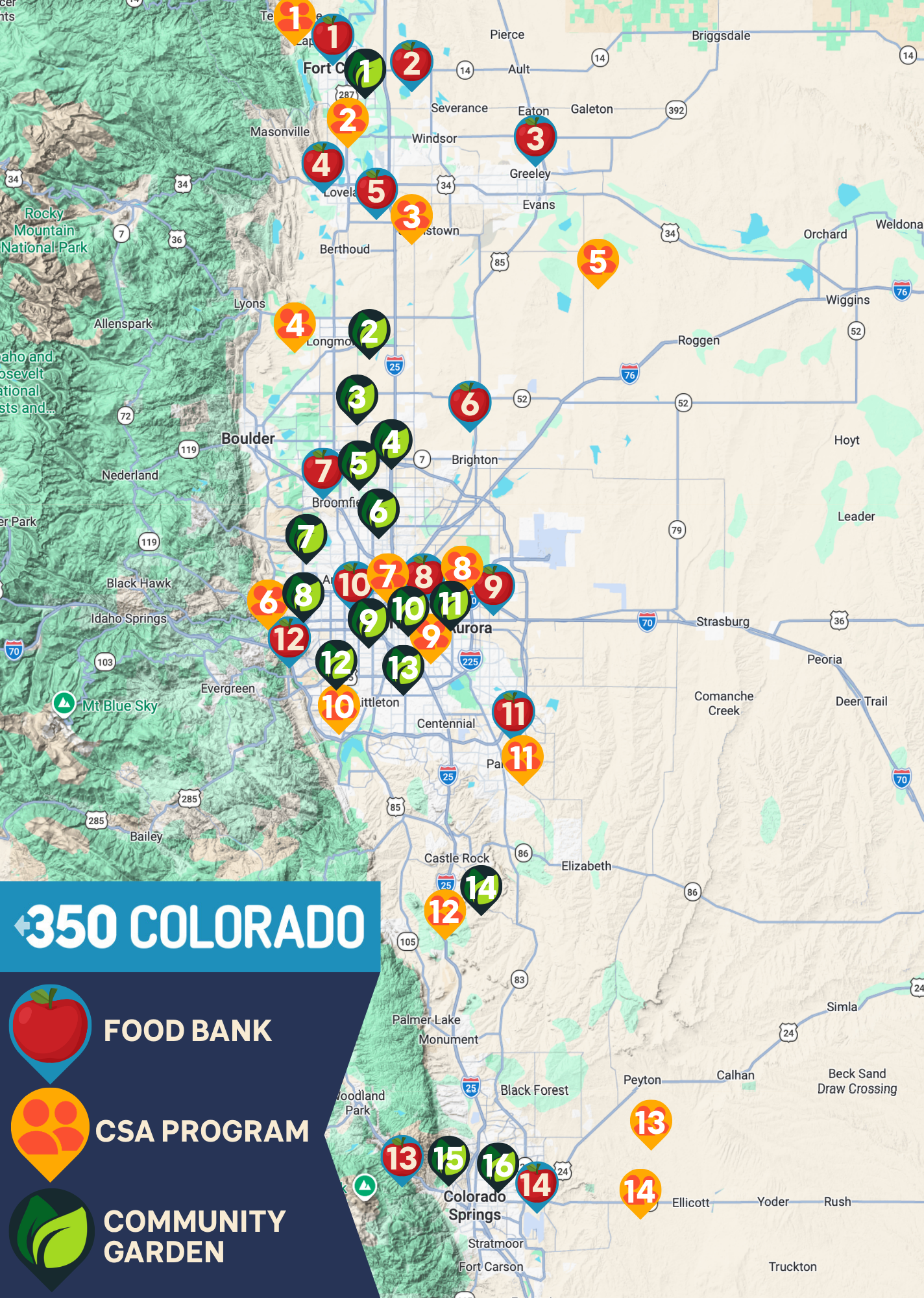
The good news is you do not have to do this alone. There are already strong local food systems you can plug into! For example, community gardens offer space to grow food, refine your gardening skills, and connect with neighbors. Community gardens across the Front Range include the Gardens on Spring Creek, Longmont Community Gardens, Kerr Community Garden, Golden Community Garden, and many more through Denver Urban Gardens. Community Supported Agriculture (CSA) programs are another great way to support local farms while getting fresh food. Farms like Native Hill, Aspen Moon, Monroe Organic Farms, GoFarm, and Sprout City Farms offer CSA shares across the region. Last but certainly not least, food banks and community food programs are also essential to building food resilience. Organizations like Food Bank for Larimer County, Metro Caring, Community Food Share, and Food Bank of the Rockies are doing critical work to ensure people can access food right now.
Food resiliency is not an abstract idea. It looks like personal and community gardens, people supporting local farms, and communities making sure everyone has enough to eat. The climate crisis is already here, but this is a way for us to band together and respond! By growing drought resistant fruits and vegetables, using less water, and showing up for each other through community gardens, CSA’s and food banks, we can support a Front Range that is more resilient, educated, and more connected moving forward!